
A Clean World Is A Happy Home
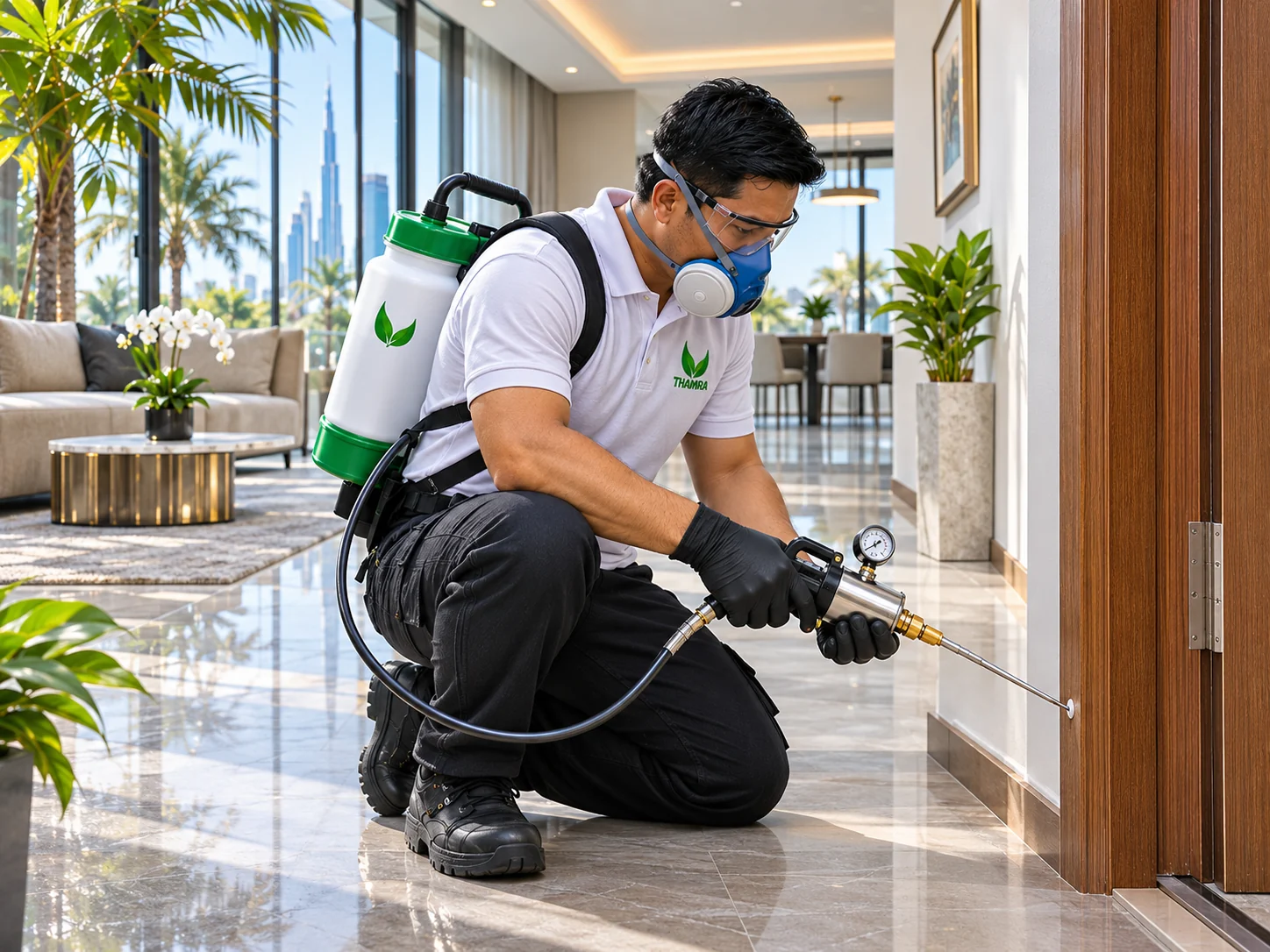
THAMRA pest control and cleaning service illustration

Professional Termite Control Services in Dubai

THAMRA Pest Control Services provides inspection-led termite assessment, targeted treatment planning, and preventive recommendations designed to help protect residential and commercial woodwork across Dubai.

Understanding Termites

What Are Termites & Why Inspections Matter

Termites are wood-feeding social insects that live in concealed colonies within soil, timber structures, door frames, wooden cabinetry, and moisture-affected materials. Unlike many household pests that appear openly on floors or counters, termites frequently feed from inside wood outward—allowing structural wear to progress quietly before surface symptoms appear.

Early inspection matters because identifying species, moisture patterns, and active foraging paths allows our team to recommend targeted measures suited to your exact property construction rather than relying on assumptions.

Common Signs of Termite Infestation

  • Pencil-thin mud tubes crossing foundation walls, baseboards, or expansion joints
  • Wooden door frames, skirting boards, or flooring that sound hollow when tapped
  • Discarded translucent insect wings near window ledges, doors, or light fixtures
  • Small mounds of uniform, wood-colored pellets (frass) beside cabinetry or furniture
  • Tight-fitting wooden doors or bubbling paint surfaces without an obvious water leak
THAMRA pest control and cleaning service illustration
Termite Identification

Key Termite Categories

Understanding the primary termite groups helps clarify why property assessment is essential before choosing any treatment method.

Subterranean Termites

Typically nest beneath soil and travel upward through slab cracks, pipe entries, and protective mud tubes to reach wooden door frames, cabinets, and skirting. They depend on soil moisture and can travel significant distances from hidden underground colonies.

Drywood Termites

Live directly inside seasoned, dry wood—such as wardrobes, wooden trims, furniture, and door casings—without needing soil contact. They often leave behind small piles of fine, gritty frass pellets pushed through tiny kick-out holes.

Dampwood Termites

Attracted to wood with elevated moisture content, such as leaking under-sink cabinets, damp exterior woodwork, or poorly ventilated utility spaces. Resolving moisture leaks is an essential companion to pest treatment.

Inspection & Options

Property Assessment & Treatment Options

Because construction materials, flooring finishes, and termite behavior differ widely across Dubai villas, apartments, and commercial structures, recommended treatment methods depend on inspection findings and site suitability. Following a thorough assessment of wooden fixtures, moisture areas, and accessible structural perimeters, our team outlines appropriate options such as:

  • Targeted Soil & Perimeter Barrier Applications: Considered where subterranean termite activity is traced along ground-level edges or slab access points.
  • Localized Wood & Void Treatments: Direct applications to affected door frames, joinery, or accessible cavities where drywood or localized activity is detected.
  • Monitoring & Baiting Systems: Considered where site layout or ongoing surveillance goals make monitoring stations appropriate.
  • Preventive Recommendations: Moisture repair guidance, timber-to-soil clearance advice, and periodic re-inspection scheduling.

Note: Effective termite management is an ongoing protective process; outcomes depend on property structure, extent of hidden activity, and follow-up maintenance.

Inspector examining indoor masonry and wall structure for pest activity
Step by Step

Our Termite Treatment Process

01

Detailed Inspection

Inspect wooden frames, skirting, cabinets, damp areas, and perimeter walls to map visible signs.

02

Custom Proposal

Explain findings clearly and recommend treatment methods suitable for your building structure.

03

Targeted Application

Execute agreed termite control procedures carefully while respecting finishes and furnishings.

04

Preventive Guidance

Provide moisture control tips, wood storage advice, and guidance on periodic monitoring checks.

Residential Termite Solutions

Focused inspections and tailored treatments for Dubai villas, townhouses, and apartments protecting wardrobes, kitchen cabinets, wooden doors, and interior trims.

Commercial Termite Solutions

Scheduled inspections and discreet structural termite control planning for offices, retail spaces, storage units, and commercial buildings across Dubai.

Preventive Recommendations

Fix plumbing or AC leaks promptly, keep cardboard and scrap wood away from exterior walls, seal foundation gaps, and schedule periodic woodwork inspections.

Termite FAQs

Termite Control Questions Answered

While termites do not eat concrete itself, subterranean termites easily pass through microscopic cracks, expansion joints, and plumbing gaps in concrete slabs to reach wooden doors, skirting boards, kitchen cabinets, wardrobes, and gypsum or paper-faced finishes inside the building.

Termites are wood-feeding insects with straight antennae, broad waists, and equal-length wings in swarmers—completely different from bed bugs (flat reddish-brown insects found around sleeping areas) and ants (which have pinched waists and elbowed antennae). A site inspection verifies the exact pest before treatment.

No. Treatment options depend on inspection findings, the suspected termite type, flooring and wall construction, and whether activity is localized or perimeter-related. Our team explains suitable approaches after inspecting your property.

Suspect Termite Activity? Schedule an Inspection.

Speak with THAMRA Pest Control Services to arrange a thorough termite assessment for your Dubai home or commercial property.

Chat on WhatsApp